

So, how much does a website actually cost? The short answer is anywhere from $1,000 to $10,000 for a basic site, but that number can easily climb to $30,000 or more for something truly custom. The final price tag is a spectrum, really. It all depends on what you need, how complex it is, and who you hire to build it.
This guide will break down those numbers, give you a realistic idea of what to budget, and show you how our team can help you make the smartest investment for your business.
Your Quick Guide to Website Design Costs
Trying to pin down a website’s cost can feel a lot like trying to price a house without a blueprint. Are we building a cozy bungalow or a sprawling mansion? A simple “brochure” website is a relatively straightforward project, but a custom e-commerce platform with all the bells and whistles is a completely different beast—and a much bigger investment.
Our goal here is to give you a clear baseline and actionable advice. We’ll walk through the different cost brackets so you can budget with confidence. Think of it not just as a one-time expense, but as an investment in your company’s most important online asset. Knowing what drives the price will help you have a much more productive conversation with any designer or agency you talk to. If you ever feel stuck, just remember our dedicated team is here to help you get clarity with professional advice and a free estimate.
Breaking Down the General Costs
It helps to think about website projects in tiers. Each level solves a different business problem and, naturally, comes with a different price range.
- Basic Informational Sites: These are fantastic for small businesses that just need a professional-looking online home. We’re talking a few essential pages: Home, About, Services, and Contact. Straightforward and effective.
- Custom Feature-Rich Sites: This is for businesses that need their website to do more. Think booking systems for a spa, advanced quote forms for a contractor, or unique design elements that make your brand pop.
- Large-Scale E-commerce or Web Applications: These are the big, complex projects. They’re often built from the ground up and might involve massive product databases, custom payment gateways, and secure user portals.
For businesses in California, the cost to build a website generally lines up with these national trends, but the specifics always come back to the project’s complexity. A small business website, for example, can land anywhere from under $1,000 to over $10,000. A custom site with advanced features could be in the $30,000+ range, while a big e-commerce build often falls between $10,000 and $75,000. It’s always a good idea to research national cost averages to see how they compare.
The most important thing to remember is this: there is no one-size-fits-all price. A clear, detailed scope of work is your best defence against surprise costs later on. Our team is ready to help you build that scope.
To give you a clearer picture, here’s a quick breakdown of what you can generally expect to pay for different types of websites.
Estimated Website Design Cost at a Glance
| Website Type | Typical Cost Range | Best For |
|---|---|---|
| Simple Brochure Website | $2,000 – $10,000 | Small businesses, startups, and professionals needing a basic online presence. |
| Business/Corporate Website | $10,000 – $25,000 | Established businesses needing custom features like blogs, galleries, and lead generation forms. |
| E-commerce Store | $10,000 – $50,000+ | Businesses selling products online, requiring secure payments, inventory management, and shipping integrations. |
| Custom Web Application | $30,000 – $100,000+ | Companies needing unique, interactive functionality like a booking platform, social network, or SaaS product. |
Keep in mind these are just starting points. The final cost will always depend on the specific features and the level of customization your project demands.
Trying to sort through all these variables can feel overwhelming, but you don’t have to figure it out alone. A professional team can help you map out your needs and match them to a budget that makes sense. We offer expert website design services to guide you through every step of the process.
If you’re ready for a clear, no-obligation quote, our dedicated team is here to help. We can provide professional advice and a free, detailed estimate to get you started on the right foot. Reach out today and let’s build something great together.
The Core Factors That Determine Your Website Cost
Ever wondered why one website quote comes in at a few thousand dollars while another hits six figures? The answer is always in the details. It’s a lot like buying a car. The base model will get you where you need to go, but if you want that custom paint job, a high-performance engine, or a top-of-the-line navigation system, the price tag starts to climb.
It’s the exact same story with your website design cost. The final price is a direct reflection of how big and complex the project is. The more custom features you need, the more time, skill, and budget it takes to bring it all together. Getting a handle on these variables is the first step to mapping out your project and having a real, productive conversation with a potential web partner.
Our team is here to walk you through these choices. We can help you build a clear, transparent estimate that lines up with your goals, making sure you only pay for what your business truly needs. Just reach out for our professional advice.
The Impact of Website Size and Scope
The most obvious factor that shapes your budget is sheer size. A simple five-page “brochure” site—think Home, About, Services, Blog, and Contact—is naturally going to cost less than a 50-page corporate website with layers of service categories, team profiles, and a massive resource library.
Every single page demands time for strategy, design, writing, and development. It’s simple math: more pages mean more work, which translates directly into a higher cost.
- Small Websites (5-10 pages): These are perfect for new businesses or solo professionals who just need a solid online home base. The focus is on getting the core message across clearly and effectively.
- Medium Websites (11-30 pages): This is the sweet spot for growing businesses. These sites often have detailed service pages, case studies, and a steady stream of blog posts to attract and hold a visitor’s attention.
- Large Websites (30+ pages): We’re talking about established companies or e-commerce powerhouses here. These projects involve complex navigation, huge product catalogues, and a significant amount of content to manage.
Figuring out your page count early is a critical piece of the puzzle for building an accurate budget. Our team can help you map out a sitemap that makes sense for your goals.
Design Complexity and Customisation
How unique your website looks and feels plays a huge part in the final cost. You’re essentially choosing between a pre-built template or a fully custom design, and each path has different budget implications.
A template-based design uses a ready-made layout that gets tweaked with your brand’s colours, logo, and content. It’s a faster and more affordable route, making it a great choice for businesses with straightforward needs. In fact, about 1 in 5 websites globally are built on platforms that lean heavily on templates.
A custom design, on the other hand, is built from the ground up, just for you. The process involves wireframing, creating mockups, and designing a user interface (UI) that is completely unique. It’s a bigger investment, for sure, but a custom site gives you total creative freedom and is built specifically to hit your business goals.
A great website isn’t just about looking good; it’s about creating a seamless and intuitive journey for your visitors. Investing in a positive user experience (UX) is non-negotiable for converting visitors into customers.
As you think about your website’s cost, remember that a quality user experience isn’t a luxury—it’s essential. Understanding and implementing website UX best practices can make a massive difference in how well your site performs in the long run.
Advanced Features and Functionality
Beyond the standard pages, any special features or functions you need will add to the website design cost. Think of these as the “engine upgrades” that allow your site to do more than just share information.
Some common examples include:
- E-commerce Capabilities: If you want to sell products online, you’ll need a shopping cart, payment gateway integrations, inventory management, and a secure checkout system.
- Booking and Scheduling Systems: Perfect for businesses that run on appointments, like salons or consultants. This requires an integrated calendar that can manage bookings and take payments.
- Custom Forms and Calculators: Interactive tools like a mortgage calculator, a detailed quote form, or a multi-step quiz all require custom development work.
- Third-Party Integrations: Need your website to “talk” to other software, like your Customer Relationship Management (CRM) or email marketing platform? That connection adds a layer of complexity.
Each of these features requires specialized development and rigorous testing to make sure everything runs smoothly. While they increase the upfront investment, they can also deliver a serious return by automating tasks and making life easier for your customers.
Trying to figure all this out can feel overwhelming, but you don’t have to go it alone. Our dedicated team is ready to offer professional advice and a free estimate to help you make sense of the costs. Get in touch today, and let’s start planning a website that fits your budget and delivers results.
Choosing Your Partner: Freelancers vs. Agencies
Deciding who will build your website is just as important as deciding how much to spend. This choice is a fork in the road, and it will shape your website design cost, the project’s timeline, and the quality of your finished site. You’ve got two main options: hiring a solo freelance web designer or partnering with a full-service agency. Each path has its own set of strengths, and the right one for you really depends on what you need.
A freelancer is your one-on-one expert. For smaller projects with a clear scope, this can be an incredibly efficient and budget-friendly route. If you know exactly what you want in a straightforward website, a talented freelancer can bring that vision to life beautifully.
On the other hand, a web design agency brings an entire crew to your project. Think of it as hiring a team of specialists: designers, developers, SEO pros, writers, and a project manager keeping everything in sync. For big, complex projects that need a variety of skills and a long-term strategy, an agency’s comprehensive approach is tough to beat.
This infographic gives you a general idea of how costs break down by site type, which is a great starting point for the budget talk, no matter who you decide to hire.
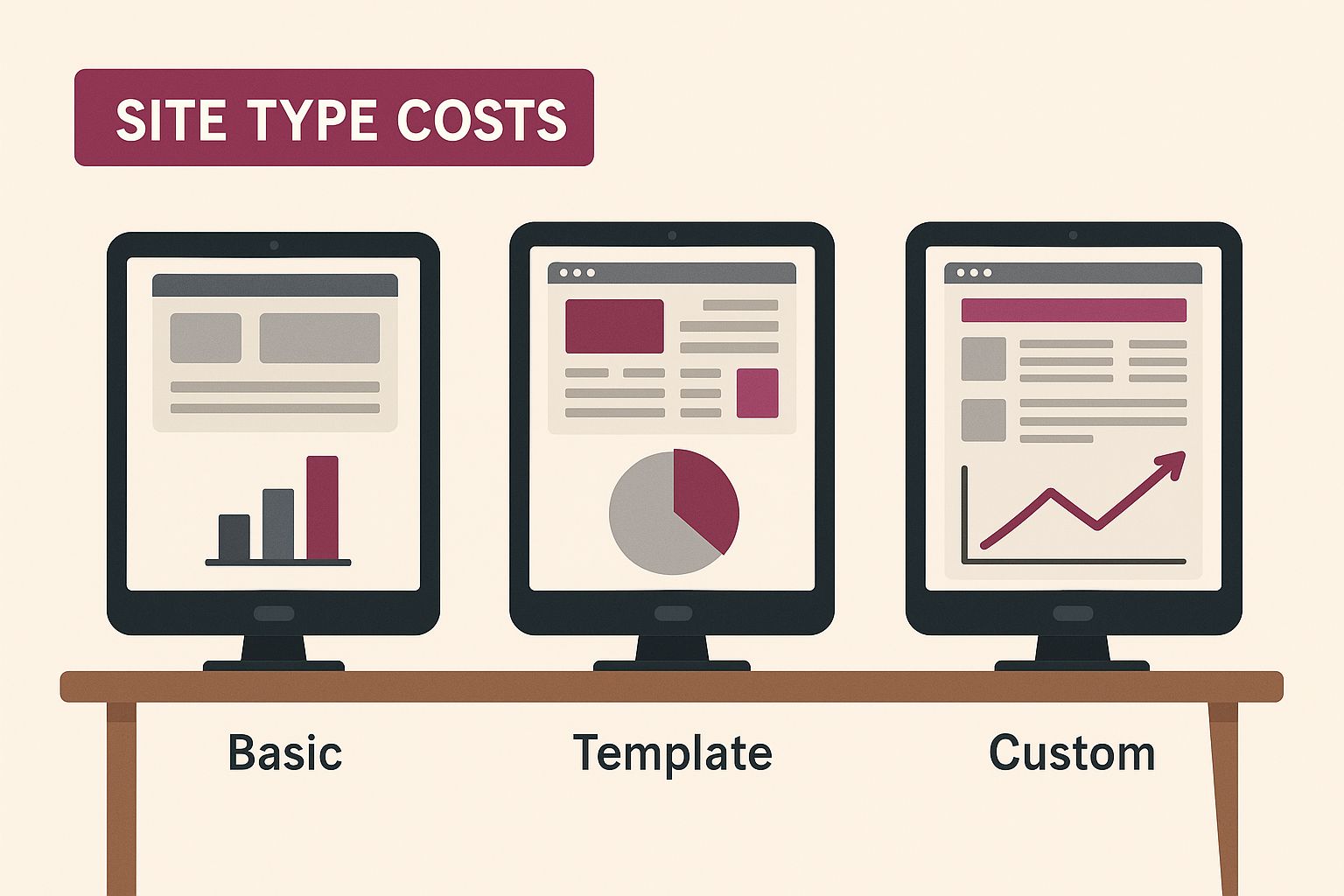
As you can see, the more complex the site, the bigger the investment—a key factor that holds true whether you go with a freelancer or an agency.
The Case for Hiring a Freelancer
Startups and small businesses often lean towards freelancers to keep a close eye on their website design cost, and for good reason. The biggest draw is affordability. Freelancers don’t have the high overhead of an agency, which means they can usually offer more competitive pricing.
You’re also getting a direct line of communication. Working one-on-one with the person actually building your site can speed up decisions and create a strong, personal working relationship. Many freelancers are specialists in a specific niche, like WordPress development or e-commerce design, making them a perfect match for projects that need deep expertise in one particular area.
But there are downsides to relying on one person. A freelancer’s availability can be a bottleneck. If they get sick or swamped with other clients, your project could hit a delay. Plus, a single person rarely has the full suite of skills—from advanced SEO and copywriting to marketing strategy—that a more ambitious project might require.
When to Partner with a Web Design Agency
Choosing an agency is an investment in a broad skill set and the power to scale. When you bring an agency on board, you’re not just hiring a designer; you’re gaining access to a coordinated team that can manage everything from the initial strategy sessions to post-launch marketing and maintenance. This all-in-one approach ensures every piece of your website works together perfectly.
Agencies are built to handle complexity. They have proven processes, multiple people to talk to, and the collective brainpower to solve tricky problems. This structure provides a crucial safety net. If one person is out of office, another can step in, keeping your project moving forward without a hitch. For a business-critical website that needs ongoing support and a strategic plan for growth, an agency is almost always the right call.
The right choice isn’t about which option is “better,” but which is the best fit for your specific project’s scope, budget, and long-term goals. Your partner should be a strategic asset, not just a service provider.
In a competitive market like California, which sees around $2.14 billion in web design revenue each year, these differences become crystal clear. Agencies in hubs like Los Angeles might quote anywhere from $1,500 to $50,000 for a project, with top-tier firms billing about $111 per hour. In sharp contrast, the average freelance web designer in California earns closer to $34.40 per hour, highlighting the significant gap in cost.
Freelancer vs. Agency: Which Is Right for Your Project?
Deciding between a freelancer and an agency can feel overwhelming, so let’s break it down. Both have their place, and the best fit truly depends on your project’s unique demands. This table offers a quick head-to-head comparison to help guide your decision.
| Factor | Freelancer | Web Design Agency |
|---|---|---|
| Cost | Typically lower due to less overhead. Great for tight budgets. | Higher investment, reflecting the team’s size and resources. |
| Communication | Direct one-on-one contact with the person doing the work. | A dedicated project manager is your main point of contact. |
| Skill Set | Often a specialist in a specific area (e.g., design, development). | A diverse team of specialists (design, SEO, content, etc.). |
| Availability | Can be limited; risk of delays if they are busy or unavailable. | Team structure ensures project continuity and support. |
| Project Scope | Best for smaller, well-defined projects with a clear scope. | Ideal for large, complex, and long-term projects. |
| Process | More flexible and informal, can adapt on the fly. | Established, structured processes for consistency and quality. |
Ultimately, the table shows there’s no single “best” answer—only what’s best for you. If your needs are straightforward and your budget is lean, a freelancer is a fantastic option. If you’re building a complex digital platform that needs a full team and ongoing support, an agency is the smarter investment.
Making the Right Decision for Your Business
At the end of the day, your choice should be a direct reflection of your project’s needs. A clean, effective WordPress website design could be the perfect task for a talented freelancer. But a custom e-commerce platform with tricky integrations and a need for ongoing marketing support is firmly in an agency’s wheelhouse.
Still not sure which way to go? You don’t have to figure it out alone. Our team is here to offer professional advice and a free, no-obligation estimate. We bring the deep expertise of an agency but with the personal attention your project deserves. Reach out today, and let’s find the perfect solution for your business goals and budget.
Uncovering the Hidden Costs of Owning a Website
The initial quote for designing and building your website is a big number, but it’s really just the starting point. It’s a common mistake to see launch day as the finish line.
A much better way to think about it is like buying a house. The purchase price gets you the keys, but you still have ongoing costs for utilities, insurance, and general upkeep to make sure it remains a great place to live. A website works the same way.
To keep your site secure, fast, and doing its job long after it goes live, you have to plan for its running costs. If you don’t, you’re opening the door to slow load times, security holes, or a site that just feels stale in a year. Factoring these expenses in from the get-go is the best way to protect your investment.
We believe in being completely upfront about this. When we quote a project, we don’t just talk about the build; we map out all the potential ongoing costs. Reach out for a free estimate, and our dedicated team will give you a clear, comprehensive breakdown so there are no surprises down the road.
Essential Annual and Monthly Expenses
Some costs are simply non-negotiable. These are the foundational expenses you’ll need to budget for every year to keep your website online and functioning properly.
- Domain Name Renewal: This is the fee you pay to keep your web address (like
yourbusiness.ca). It’s a small but vital annual cost, usually between $20 to $50 per year. The price can vary based on your registrar and the domain extension you choose (.com, .ca, .io, etc.). You can even use handy domain name valuation tools to get a sense of what your digital address might be worth. - Website Hosting: Think of hosting as the piece of digital real estate where your website lives. You pay a recurring fee (monthly or annually) for this space. It can be as low as $15 per month for basic shared hosting or climb to $100+ per month for managed solutions that deliver better speed, security, and support.
- SSL Certificate: An SSL certificate encrypts the connection between your site and your visitors, showing that little padlock icon in the browser bar. It’s absolutely essential for security and building trust. While many hosts include a basic SSL certificate for free, more advanced certificates can run from $50 to $200 per year.
Costs for Maintenance and Growth
Once you’ve covered the basics, there are other costs tied to keeping your site in top shape and helping it evolve with your business.
A website is never truly “finished.” It’s a living asset that requires consistent care and attention to continue delivering value. Budgeting for ongoing maintenance isn’t an extra—it’s a core part of a successful online strategy.
Regular updates and strategic improvements are what keep your site working for you.
- Premium Plugins and Software Licences: If your site uses special features like an online store, a booking system, or advanced forms, it’s likely powered by premium plugins. These often need an annual licence renewal to keep getting updates and support, which can cost anywhere from $50 to $300 per plugin, per year.
- Ongoing Maintenance Plans: A professional maintenance plan is like insurance for your website. It covers critical tasks like software updates, security monitoring, performance tune-ups, and regular backups. Depending on the level of service, these plans typically range from $75 to $500 per month.
- Content Updates and SEO: A website needs fresh content to stay relevant to both visitors and search engines. Whether you’re writing blog posts, updating service pages, or actively working on your SEO, this represents an ongoing investment of either your time or your money.
Getting a clear picture of the total cost of ownership is the key to creating a realistic budget. Our team is here to offer professional advice and a detailed estimate that covers every angle, ensuring you’re set up for success from day one.
How to Budget for Your Website Without Compromise
Building a powerful, professional website shouldn’t feel like an impossible expense. The secret isn’t cutting corners—it’s about smart investing. It’s about putting your money where it will deliver the biggest impact and the most value for your business.
The goal is to shift from a vague wish list to a clear, strategic roadmap. When you do that, the website design cost stops being a scary obstacle and becomes a manageable, strategic investment. With a solid plan in place, you can launch a high-quality website that serves you today and has the room to grow with you tomorrow.
Our dedicated team is always ready to help you map out a strategy and a budget that fits your business goals. Just reach out for some professional advice and a free estimate to get the ball rolling.
Prioritise Features with the MoSCoW Method
One of the most powerful things you can do to control your budget is to get brutally honest about your priorities. A proven framework for this is the MoSCoW method, which helps you sort every potential feature into one of four buckets.
This simple exercise forces you to draw a line between true necessities and nice-to-haves. It ensures your initial investment is laser-focused on what will actually drive results.
- Must-Have: These are your non-negotiables. The website simply can’t function without them. Think of a secure contact form, clear service pages, and a design that works flawlessly on mobile devices.
- Should-Have: These are important but not critical for day one. This might include a blog, client testimonials, or basic social media integration.
- Could-Have: These are desirable features that have a smaller impact on your main objectives. Examples could be an advanced photo gallery or a complex quote calculator.
- Won’t-Have (For Now): These are features you consciously decide to put on the back burner. This could be a full e-commerce system or a client login portal that can be added in a later phase.
By clearly separating your needs from your wants, you build a solid foundation for your project. This also makes it much easier to get an accurate, itemized quote from any designer or agency you talk to. We’re here to help you through this process.
Embrace a Phased Launch with an MVP
Here’s a little industry secret: you don’t need to build your dream website all at once. A much smarter, more budget-friendly approach is to plan a phased launch, starting with a Minimum Viable Product (MVP).
An MVP isn’t a cheap or incomplete website. It’s a lean, professional version that includes all your “Must-Have” features and is designed to hit your primary business goals right out of the gate.
The MVP approach gets a high-quality, professional website online quickly and on a tighter budget. It lets you gather real-world feedback from users, so you can make data-driven decisions about which “Should-Have” or “Could-Have” features to invest in next.
This iterative process puts a professional online presence within reach for any business, at any stage. It lowers your upfront financial risk and makes sure every dollar you spend on future upgrades is a direct response to proven needs, not just a guess. As your business grows, you can strategically reinvest in your site, adding more advanced functionality over time.
This strategy ensures your digital presence scales right alongside your success. As you expand, you might even find yourself ready to add services like our monthly social media content packages to drive even more traffic to your evolving site.
Actionable Tips for Smart Budgeting
Getting a handle on your website design cost comes down to being proactive and organized. By sticking to a few key principles, you can ensure there are no surprises and make informed decisions that protect your investment.
Here are a few practical steps to take:
- Request Itemized Quotes: Never settle for a single lump-sum price. Always ask for a detailed breakdown that shows the cost for design, development, content, and any special features. This transparency lets you see exactly where your money is going and compare proposals apples-to-apples.
- Plan for Contingency: Even with the best plan, things come up. It’s just a reality of any project. A smart move is to set aside an extra 10-15% of your total budget as a contingency fund. This buffer keeps small scope changes from derailing your entire project.
- Discuss Future Scalability: Talk to any potential design partner about your long-term vision. A well-built website should be scalable, making it easy to add new features down the road without having to start from scratch.
Our team is ready to provide a free, transparent estimate that lets you budget with confidence. Let us help you put together a financial plan for a website that truly works for you.
Your Website Design Cost Questions Answered
https://www.youtube.com/embed/vksHgs3It3o
Trying to pin down website pricing can feel like you’re navigating a maze of technical jargon and vague estimates. It’s totally normal to have questions. To help cut through the confusion, we’ve put together answers to the most common questions we hear from business owners just like you.
Thinking through these points is a huge first step in nailing down your budget and project scope. The answers will give you a realistic idea of what’s possible and set you up for much better conversations with any designer or agency you talk to. Our team is always here to offer professional advice and a free estimate if you’re still feeling unsure.
Can I Get a Good Website for Under $5000?
Yes, you absolutely can. A budget under $5,000 is often more than enough to get a high-quality, professional website off the ground—one that makes a fantastic first impression. The trick is to be smart about it and focus on what your business truly needs right now.
With that kind of budget, you can get a brilliant brochure-style website, usually built on a premium template. This would typically cover:
- A professionally designed layout, branded with your colours and logo.
- The essential pages: Home, About, Services, and Contact.
- A mobile-responsive design that looks sharp on any screen, from a phone to a desktop.
This approach gives you a polished, professional look and solid core functionality without the cost of complex custom features. It’s the perfect way to start generating leads and building credibility online.
How Long Does It Take to Build a Website?
The timeline for a website project is tied directly to its complexity. Honestly, the two biggest things that keep a project on track are a clearly defined plan from the start and quick, decisive feedback from you along the way.
As a general rule of thumb, here’s what you can expect:
- Simple Brochure Website (5-10 pages): Usually about 4 to 6 weeks from kickoff to launch.
- Custom Business Website (10-25 pages): Plan for 8 to 12 weeks, depending on how many unique features are involved.
- E-commerce or Web Application: These are bigger beasts. Expect 12 to 16 weeks or even longer, as they need a lot more development and rigorous testing.
Planning a realistic timeline is just as important as setting a budget. It ensures that everyone involved has clear expectations and that the final product is launched without unnecessary rush or stress.
Do I Have to Pay for Website Maintenance?
You don’t have to, but skipping ongoing maintenance is one of the biggest mistakes we see people make. Think of it like getting regular oil changes for your car—it’s preventative care that keeps everything running smoothly and helps you avoid a massive, expensive breakdown down the road.
A monthly maintenance plan protects your investment. It covers critical tasks like software updates, security scans, and performance checks. This proactive work keeps your site safe from hackers, loading quickly for visitors, and working exactly as it should. It’s a small price to pay for total peace of mind.
Still feeling a bit lost on your next steps? Our dedicated team is ready to help. Reach out for a free, no-obligation estimate, and let’s get all your questions answered.
Finding the Right Fit for Your Budget and Goals
Figuring out what a new website will cost is the first real step toward making a smart investment in your business. The “right” price isn’t just about finding the cheapest option; it’s about finding the sweet spot where your investment delivers a powerful, goal-oriented website that actually generates a return. Think of it this way: a well-built website is your best employee, working around the clock to attract customers and fuel growth.
Whether you’re after a simple online brochure to build credibility or a complex e-commerce machine to drive sales, the journey doesn’t need to be intimidating. The secret is finding a partner who prioritizes transparency, truly listens to your vision, and works with you—not just for you—at every stage. You shouldn’t have to assemble this puzzle by yourself.
A Partner in Your Growth
It’s easy to get lost in all the variables of website design, but our team is here to cut through the noise and bring some clarity. We’re ready to listen to your specific needs, offer our professional guidance, and help you map out a project that aligns perfectly with your business objectives. Our aim is to build a website that not only respects your budget but also becomes a core engine for moving your business forward.
A great website is an investment in your company’s future. It should solve problems, create opportunities, and give customers a clear path to engage with you. Making the right choice from the start means you’re building an asset that can grow right alongside your success.
Take the Next Step with Confidence
You now have a much clearer picture of what goes into a website investment, which means you can make decisions from a place of knowledge, not guesswork. The next move is to put that knowledge into action. We can help you take that leap with total confidence, providing the professional advice you need to feel sure about the path ahead.
Our entire process is built on open communication and a genuine commitment to seeing you succeed. We start with a no-obligation, free estimate to give you a transparent breakdown of the costs. Let’s build something great together.
- Get Professional Advice: Our experts are on hand to answer your questions and offer insights specific to your industry and goals.
- Receive a Free Estimate: Get a detailed, straightforward quote with no surprises, so you can plan your budget with peace of mind.
- Access a Dedicated Team: You’ll be working with a full team of designers, developers, and strategists all dedicated to making your vision a reality.
Ready to build a website that gets real results? The team at Sugar Design Group is here to guide you. Reach out today for a free consultation and let’s start shaping your digital future. Learn more and get your free estimate.